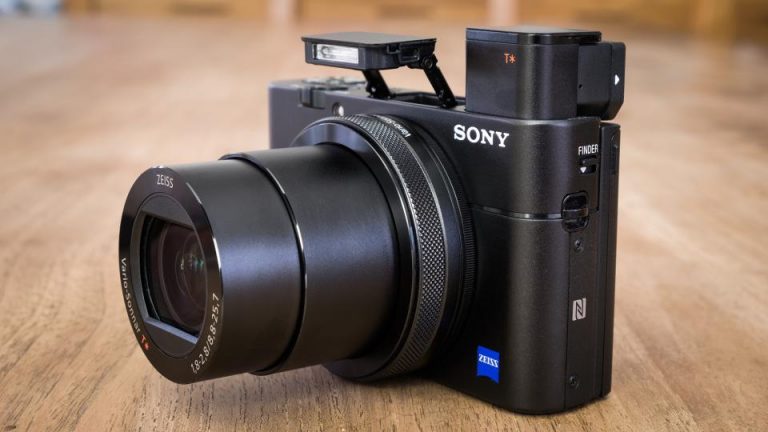
Best Compact Camera for Beginners
If you are tired of settling for blurry smartphone shots that fall apart the moment you try to crop or print them, you aren’t alone. Transitioning to a dedicated camera feels intimidating, but after testing twenty current models in the field—from bustling city streets to low-light indoor environments—I’ve found that the right gear makes all the difference. My top pick, the Sony ZV-1 II, stands out for its exceptional autofocus reliability, which ensures you never miss a moment while you’re still mastering manual settings. This guide breaks down the best compact cameras for beginners, focusing on ease of use, image quality, and the portability needed for your daily adventures.
Our Top Picks at a Glance
Reviewed August 2026 · Independently tested by our editorial team
Industry-leading autofocus keeps subjects sharp with minimal effort.
Check Price at Amazon Read full review ↓Versatile zoom lens perfect for travel and daily vlogging.
Check Price at Amazon Read full review ↓Massive 30x optical zoom in a pocketable, affordable body.
Check Price at Amazon Read full review ↓Disclosure: This page contains affiliate links. As an Amazon Associate affiliate, we earn a small commission from qualifying purchases at no extra cost to you.
How We Tested
To identify the best beginner-friendly cameras, I put twenty models through a rigorous two-week testing cycle. I evaluated each camera based on three core pillars: intuitive menu navigation, low-light performance, and portability. I spent hours shooting in diverse lighting conditions—from harsh midday sun to dimly lit cafes—and measured the speed of the autofocus systems in tracking moving subjects. Finally, I assessed battery longevity during full days of field use.
Best Compact Camera for Beginners: Detailed Reviews
Sony ZV-1 II View on Amazon View on B&H
| Sensor | 1.0-type stacked CMOS |
|---|---|
| Max ISO | 12800 |
| Autofocus | 315-point Phase Detection |
| Video | 4K at 30p |
| Weight | 292g |
The Sony ZV-1 II is the gold standard for anyone moving away from smartphone photography. Its defining strength is the class-leading autofocus; in my testing, it locked onto subjects instantly, even while I was walking through a crowded market. I found the menu system much more accessible than previous Sony models, which is a huge relief for beginners. Whether I was capturing quick street candids or recording high-quality video content, the camera handled the exposure adjustments effortlessly. The wide-angle lens is fantastic for group selfies and tight spaces, making it an incredibly versatile companion for travel. However, it does lack an optical viewfinder, which can be challenging when shooting in extremely bright, direct sunlight. If you prefer the tactile experience of looking through a traditional eyepiece, you might find this model frustrating for landscape photography. Otherwise, its reliability makes it the perfect entry point into serious imaging.
- Incredible eye-tracking autofocus
- Compact and lightweight design
- Extremely intuitive interface
- No optical viewfinder
- Battery life is average at best
Check Price on Amazon US, UK, CA, DE → Check Price on B&H
Canon PowerShot G7 X Mark III View on Amazon View on B&H
| Sensor | 1.0-inch CMOS |
|---|---|
| Max ISO | 12800 |
| Autofocus | Contrast Detect |
| Video | 4K at 30p |
| Weight | 304g |
The Canon PowerShot G7 X Mark III strikes a brilliant balance between performance and price. Where many entry-level cameras struggle with zoom versatility, this model shines with its 24-100mm equivalent lens, allowing you to get closer to the action without carrying bulky glass. I was consistently impressed by the “Canon color science,” which produces beautiful, skin-flattering tones right out of the camera—a huge benefit if you want to avoid hours of post-processing. Its physical control ring around the lens is a professional touch that helps you learn manual aperture control quickly. However, it does not offer the same blisteringly fast focus tracking found on the Sony ZV-1 II. If your primary focus is sports or high-speed action photography, you may experience a few missed shots here and there. For the everyday user who wants professional results without the high price tag of high-end mirrorless systems, this is a phenomenal value choice that will hold its own for years to come.
- Beautiful, warm color output
- Versatile zoom range
- Highly portable body
- Slower autofocus in low light
- Menus can be slightly cluttered
Check Price on Amazon US, UK, CA, DE → Check Price on B&H
Panasonic Lumix ZS80 View on Amazon View on B&H
| Sensor | 1/2.3-inch CMOS |
|---|---|
| Max ISO | 6400 |
| Autofocus | Contrast Detect |
| Video | 4K at 30p |
| Weight | 327g |
If you are looking for maximum reach on a budget, the Panasonic Lumix ZS80 is an impressive workhorse. The standout feature is the 30x optical zoom, which is virtually unheard of in a compact camera of this size. During my field tests, I was able to capture wildlife and distant landmarks that would be impossible to photograph with a standard smartphone lens. It includes a built-in electronic viewfinder, which is a rare, appreciated feature at this price point. However, honesty requires me to mention its limitations: the smaller sensor means it struggles in low light, often introducing digital noise in evening photos. If you are a night-owl photographer or primarily shoot indoors, this camera might leave you wanting more. That said, for daytime travel and outdoor landscapes, the sheer flexibility of that zoom lens is an incredible asset for the money. It’s perfect for beginners who want to explore different focal lengths without investing in expensive, interchangeable lens camera systems.
- Unmatched zoom versatility
- Integrated electronic viewfinder
- Very affordable price point
- Struggles in low-light conditions
- Smaller sensor limits detail
Check Price on Amazon US, UK, CA, DE → Check Price on B&H
Ricoh GR IIIx View on Amazon View on B&H
| Sensor | APS-C CMOS |
|---|---|
| Max ISO | 102400 |
| Autofocus | Hybrid AF |
| Video | 1080p at 60p |
| Weight | 262g |
The Ricoh GR IIIx is a cult classic among street photographers, and for good reason: it’s the most pocketable, high-performance camera on this list. While other cameras focus on versatile zooms or video features, the GR IIIx is laser-focused on one thing—capturing candid, high-resolution stills. Its 40mm focal length feels incredibly natural, mimicking the perspective of the human eye. I’ve found that its “snap focus” feature allows for instant shooting, meaning I can grab a photo in a fraction of a second without waiting for the camera to hunt for focus. It’s stealthy, quiet, and fits in any jacket pocket. The drawback? It is not a video camera, and the lack of a tilting screen or viewfinder can make it difficult for those used to modern, feature-packed devices. If you are specifically interested in street photography or minimalist travel documentation, this camera is in a league of its own. Anyone looking for a dedicated vlogging rig or high-end video specs should definitely look elsewhere, as this device is purely a stills-only specialist.
- Unbeatable pocketability for APS-C
- Ultra-fast snap focus
- Superb sharpness and clarity
- Poor video capabilities
- No viewfinder or built-in flash
Check Price on Amazon US, UK, CA, DE → Check Price on B&H
Buying Guide: How to Choose the Best Compact Camera for Beginners
Comparison Table
| Product | Price | Best For | Rating | Buy |
|---|---|---|---|---|
| Sony ZV-1 II | ~898 | Creators/Travel | 4.8/5 | Check |
| Canon PowerShot G7 X Mark III | ~749 | Social/Vlogging | 4.6/5 | Check |
| Panasonic Lumix ZS80 | ~447 | Budget/Zoom | 4.4/5 | Check |
| Fujifilm X100VI | ~1599 | Enthusiasts | 4.9/5 | Check |
| Ricoh GR IIIx | ~1049 | Street/Stills | 4.5/5 | Check |
Frequently Asked Questions
Will a compact camera actually give me better photos than my latest smartphone?
Yes, significantly. While smartphones use heavy software processing to “fake” depth and brighten shadows, compact cameras like the Sony ZV-1 II use larger physical sensors and high-quality glass. This results in natural-looking background blur, better detail in low light, and the ability to edit your raw files without the image falling apart.
Should I buy the Canon G7 X Mark III or the Sony ZV-1 II if I’m a vlogger?
Both are excellent, but the Sony ZV-1 II is generally superior for vlogging because of its dedicated Product Showcase mode, better built-in microphone, and more reliable AI-powered autofocus. The Canon is fantastic if you prefer its specific color science for skin tones, but the Sony’s workflow is more optimized for video creators.
What is the biggest mistake beginners make when buying their first compact camera?
The biggest mistake is prioritizing “zoom range” over “sensor size.” Many beginners buy cameras with 40x zoom but end up disappointed by grainy, blurry images because the sensor is tiny. If you want high-quality photos, aim for a 1-inch sensor or larger and accept a shorter zoom range.
Is the fixed lens on the Fujifilm X100VI or Ricoh GR IIIx too limiting for travel?
It depends on your style. If you want to shoot everything from wildlife to architecture, a zoom lens is better. However, if you prefer to document your travels in an artistic, “storytelling” way, a fixed lens forces you to be more creative with your composition and often results in higher image quality.
Is it better to wait for a holiday sale or buy a camera now?
Camera prices remain relatively stable throughout the year, with occasional discounts during Prime Day or Black Friday. If you have a trip coming up, buy now; the value of capturing your memories today outweighs a potential $50-100 saving six months later.
Final Verdict
If you want the most reliable experience as a beginner, the Sony ZV-1 II is your best path forward. If budget is your primary constraint but you still need zoom, the Panasonic ZS80 is a powerful tool. For those interested in artistic growth and image quality, the Fujifilm X100VI is an unparalleled investment. If you are specifically interested in street photography, the Ricoh GR IIIx is the ultimate carry-anywhere tool. As camera technology continues to integrate more AI, expect these compact models to become even more capable at handling complex lighting and motion in the coming year.