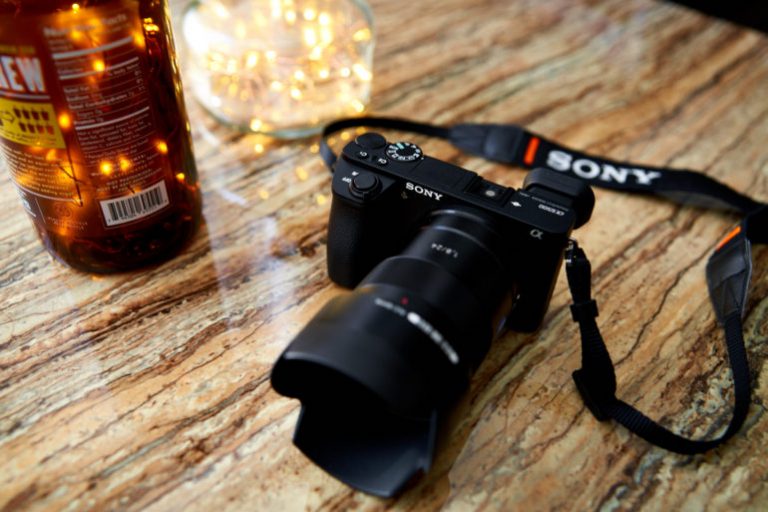
Best Wide-angle Lenses for Sony a7 III
The best wide-angle lens for the Sony a7 III should add useful coverage without turning an affordable full-frame kit into an unnecessarily expensive project. Our overall recommendation is Tamron 16-30mm F2.8 Di III VXD G2 for Sony E; Sigma 16-28mm F2.8 DG DN Contemporary for Sony E is another fast zoom worth comparing, while Sony FE 20mm F1.8 G suits a smaller kit built around a bright prime.
The a7 III remains a practical camera for landscapes, travel and environmental photography. A lens can also remain useful if you change to another full-frame Sony E-mount body later. Start with the scenes your current lens cannot fit, then decide whether you need a bright aperture, a longer zoom endpoint or video-oriented controls. These picks prioritize usable combinations rather than assuming an older camera must be paired with older lenses.
Our Top Picks at a Glance
Value-conscious full-frame landscapes, travel and hybrid shooting
A useful 16–30 mm range with a constant F2.8 aperture.
Check Current Price →Read recommendation ↓A constant-F2.8 option when 28 mm is a sufficient long end.
Check Current Price →Read recommendation ↓A bright fixed view when you do not need the widest zoom setting.
Check Current Price →Read recommendation ↓Disclosure: This page contains affiliate links. As an Amazon Associate, we earn from qualifying purchases at no extra cost to you. Prices, availability and retailer bundles vary by region.
How We Selected These Lenses
This selection considers Sony a7 III shooting needs, focal-length coverage, aperture, handling and filter requirements. Specifications are drawn from manufacturer documentation. Recommendations are editorial buying guidance rather than results from a hands-on laboratory comparison.
Buy the Sony E-mount version of any third-party lens listed here. Check camera/lens compatibility and current firmware for the electronic functions you plan to use. Choose the coverage and handling that match your assignments, and compare the full cost of the lens and required accessories.
Best Wide-angle Lenses for Sony a7 III: Detailed Recommendations
Tamron 16-30mm F2.8 Di III VXD G2 for Sony E View on Amazon View on B&H
| Format | Full frame |
|---|---|
| Focal length | 16–30 mm |
| Maximum aperture | F2.8 |
| Approximate weight | 440 g (Sony E) |
| Filters | 67 mm front thread |
| Zoom type | Manual zoom |
The Tamron 16-30mm G2 is our first recommendation for an a7 III owner who wants a capable wide zoom and expects to keep it through a future body upgrade. The 16 mm starting point covers more than a typical standard zoom, while reaching 30 mm makes it useful for a sequence of travel and environmental photographs without an immediate lens change.
Choose the Sony E-mount A064 version and compare the complete retail package, warranty and price. The lens is not a substitute for a normal zoom in every situation, and the body does not acquire newer-camera electronic features simply by mounting a recent lens. Buy it for coverage and handling you can use now.
- Practical wide-to-environmental range
- Constant F2.8 and normal front filters
- Does not reach 35 mm
- Check body-specific feature compatibility
Check Price on Amazon US, UK, CA, DE → Check Price on B&H
Sigma 16-28mm F2.8 DG DN Contemporary for Sony E View on Amazon View on B&H
| Format | Full frame |
|---|---|
| Focal length | 16–28 mm |
| Maximum aperture | F2.8 |
| Approximate weight | 450 g |
| Filters | 72 mm front thread |
| Zoom type | Internal manual zoom |
The Sigma 16-28mm is a sensible comparison if a 28-75mm or another standard zoom already covers the rest of your photography. In that arrangement, the wide lens has a clear task: fit the room, enlarge a foreground or describe the scene around a person. You do not need every lens in the bag to overlap extensively.
Its internal zoom is useful when you prefer the external lens length to stay constant as you reframe. The choice against the Tamron should account for local price and the importance of the longer endpoint, rather than an unsupported claim that either lens is always sharper. Get the Sony E DG DN version rather than an adapted DSLR lens with a similar name.
- Internal zoom arrangement
- Useful complement to a standard zoom
- Ends at 28 mm
- No power zoom
Check Price on Amazon US, UK, CA, DE → Check Price on B&H
Sony FE 20mm F1.8 G View on Amazon View on B&H
| Format | Full frame |
|---|---|
| Focal length | 20 mm |
| Maximum aperture | F1.8 |
| Approximate weight | 373 g |
| Filters | 67 mm front thread |
| Zoom type | Prime; no zoom |
The 20mm F1.8 G suits an a7 III owner who prefers one deliberate wide viewpoint and wants more aperture flexibility after dark. It can be a useful companion to a compact normal prime, allowing a simple two-lens travel kit instead of carrying several zooms.
The compromise is that 20 mm may not fit a confined interior, and cropping video modes narrow the view further. Before choosing the prime over a zoom, look at the focal lengths you use most often and identify the photographs where you actually run out of width. A lens that is pleasant to carry still needs to solve that framing problem.
- Bright aperture for available-light work
- Standard front filters
- Cannot zoom wider for a tight space
- One viewpoint requires deliberate camera placement
Check Price on Amazon US, UK, CA, DE → Check Price on B&H
Sony FE 16-35mm F2.8 GM II View on Amazon View on B&H
| Format | Full frame |
|---|---|
| Focal length | 16–35 mm |
| Maximum aperture | F2.8 |
| Approximate weight | 547 g |
| Filters | 82 mm front thread |
| Zoom type | Manual zoom |
The 16-35mm GM II is the premium route for an a7 III user whose work regularly needs both a bright aperture and a 35 mm endpoint. It can simplify coverage of a room, the people in it and the location around them, especially when switching lenses would interrupt the moment.
It is a substantial investment relative to the body, so buy it because the working range earns its place. An occasional landscape photographer might gain more from a less expensive zoom, reliable support and a trip to a worthwhile location. A professional sharing lenses across several Sony bodies may make a different calculation.
- Broad everyday wide range
- Constant F2.8
- High purchase cost
- 82 mm filters increase accessory spending
Check Price on Amazon US, UK, CA, DE → Check Price on B&H
Buying Guide: How to Choose a Wide-angle Lens for Sony a7 III
Comparison Table
| Lens | Best For | Maximum Aperture | Approx. Weight | Buy |
|---|---|---|---|---|
| Tamron 16-30mm F2.8 Di III VXD G2 for Sony E | A current fast zoom for an established full-frame kit | F2.8 | 440 g (Sony E) | Check |
| Sigma 16-28mm F2.8 DG DN Contemporary for Sony E | A wide companion to an existing standard zoom | F2.8 | 450 g | Check |
| Sony FE 20mm F1.8 G | Night streets and light travel kits | F1.8 | 373 g | Check |
| Sony FE PZ 16-35mm F4 G | Supported video and controlled zoom moves | F4 | 353 g | Check |
| Sony FE 16-35mm F2.8 GM II | Mixed assignments where one wide zoom does several jobs | F2.8 | 547 g | Check |
Weights are approximate manufacturer figures for the specified lens version and exclude added filters and support accessories. Focal lengths are actual lens focal lengths; recorded field of view depends on sensor coverage and camera settings.
Frequently Asked Questions
Will newer Sony E-mount lenses fit the a7 III?
Compatible full-frame Sony E-mount lenses fit directly. Specific functions still depend on camera and lens support, so do not assume a lens brings newer-body video features to the a7 III.
Which fast zoom is the best starting point?
The Tamron 16-30mm G2 is our overall choice for its practical range. Compare the Sigma 16-28mm if it is better priced locally or if its internal zoom arrangement suits your setup.
Is a 20 mm prime enough for landscapes?
It can be, if the view fits your composition. It is less adaptable in a restricted space than a zoom beginning at 16 mm, so judge it by your actual framing needs.
Can I save money with an APS-C wide lens?
It will not cover the full-frame sensor in the same way. Cropped use changes the field of view and reduces the sensor area available for photographs. A full-frame lens is the straightforward choice for this guide’s uses.
Do I need F2.8 for daytime architecture?
Not necessarily. Static architecture on a tripod often permits a moderate aperture and longer exposure. F2.8 becomes more useful for people, events or available-light situations where shutter speed matters.
Does the lens fix the camera’s video limitations?
No. Lens coverage and handling can improve the setup, but frame rates, recording formats and body-specific features remain camera capabilities.
Final Verdict
The Tamron 16-30mm G2 is the most balanced starting point for an a7 III fast-wide kit, with the Sigma 16-28mm a useful alternative. Choose the 20mm G for a bright prime, the PZ zoom for video handling, or the GM II when its range and aperture justify the premium. Prioritize the photographs and clips you cannot currently make.